
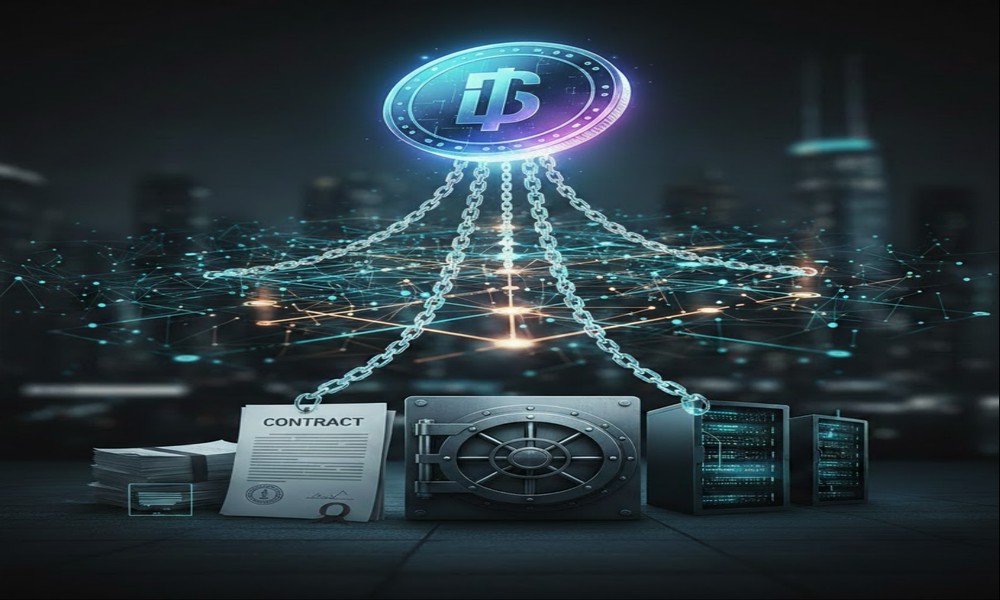
Tokenized markets are often presented as autonomous and self-executing, suggesting a world where capital flows and rights are handled entirely on-chain. Yet for investors allocating significant resources, the reality is more constrained.
While blockchain technology can record ownership and automate certain processes, capital remains exposed to legal, operational, and custodial dependencies that exist entirely offchain. Overlooking these anchors introduces avoidable risks, and disciplined investors must account for them to ensure the integrity of their holdings.
Even in markets where adoption and activity are high, gaps in governance, custody, and legal enforceability persist. These gaps are not hypothetical; they can directly affect the accessibility and usability of tokenized assets, making it critical for high-net-worth investors, business owners, and allocators to understand the full risk landscape.
The Structural Reality of Tokenization
Tokenization can efficiently represent ownership or contractual claims on a digital ledger, but the ledger alone cannot guarantee enforceability or operational continuity. Legal ownership, transfer rights, and redemption terms remain embedded in offchain agreements. Smart contracts can execute pre-defined rules, yet they cannot arbitrate disputes, correct human errors, or respond to regulatory constraints.
From a capital perspective, ignoring these dependencies can create blind spots. For instance, a token representing fractional ownership of a digital asset is only as reliable as the agreements, custodial arrangements, and operational controls that support it. Investors must evaluate the entire system (on-chain and offchain) to ensure that execution aligns with intended outcomes. Tokenization does not remove the need for accountability or operational rigor; it reframes where those obligations reside.
Custody and Control Remain Central Risk Variables
Custody is frequently cited as a technical solution, yet it remains a core point of risk. Private keys, multi-signature arrangements, and third-party custodial services introduce human and institutional dependencies. Operational authority (who can intervene, pause, or reverse actions) is often concentrated in specific entities or individuals. Without transparency, investors cannot fully understand their exposure.
Even when technical systems appear robust, the human and operational layers determine how failures are mitigated. For example, access restrictions, procedural errors, or lapses in monitoring can prevent timely redemptions or transfers. For investors with meaningful allocations, these risks are not theoretical; they directly impact capital accessibility and preservation.
Legal Anchors Are Foundational
Legal agreements provide the framework that defines ownership, obligations, and dispute resolution. Jurisdictional clarity is not merely a formality; it determines whether a claim can be enforced, how assets can be transferred, and under what circumstances remedies exist. Tokens themselves do not confer legal rights independent of these structures.
For capital allocation, the presence and enforceability of these agreements is a critical determinant of risk. Ambiguous or incomplete legal frameworks create the potential for protracted disputes or operational interruptions, which can materially affect an investor’s ability to act or reclaim capital. In other words, tokenized representation without legal grounding is incomplete from a stewardship perspective.

The Illusion of Full Autonomy
Marketing often positions tokenized assets as fully autonomous, yet technical sophistication cannot replace governance or legal oversight. Overreliance on code alone abstracts operational risk and can create a false sense of security. Investors may assume that self-executing logic eliminates all external dependencies, but this is rarely true in practice.
Discipline begins with acknowledging these limitations. Tokenized workflows may streamline certain functions, but they remain embedded in a broader ecosystem of operational, custodial, and legal controls. Ignoring these factors can lead to mispricing risk, undermining careful allocation decisions.
Operational Risk in Practice
Several scenarios illustrate how offchain dependencies manifest in real-world risk:
- Custodial Freezes: Even with advanced key management, a custodial entity may pause withdrawals or transfers due to compliance reviews, legal holds, or internal investigations. Without understanding these contingencies, investors may face temporary capital inaccessibility.
- Legal Disputes: Disagreements between issuers, counterparties, or regulatory authorities can affect redemption or transfer rights. Tokenized workflows alone cannot resolve these conflicts.
- Governance Failures: Tokenized mechanisms may include voting or automated processes, but manual intervention is often required in exceptional circumstances, such as correcting erroneous distributions or responding to unforeseen events.
These operational realities are integral to how tokenized markets function today. Investors must account for them to ensure that capital is accessible, protected, and aligned with intended stewardship objectives.
The Kenson Perspective
Kenson Investments evaluates tokenized structures through a disciplined, investor-first lens. They do not treat tokenization as a replacement for governance, custody, or legal clarity; instead, they view it as a tool layered atop these critical foundations. Their philosophy emphasizes operational transparency, repeatable processes, and clearly defined accountability paths.
From a capital perspective, Kenson’s approach recognizes that tokenized markets introduce efficiencies but do not eliminate the responsibility to verify enforceability, control, and oversight. Each structure is assessed for offchain dependencies and potential failure points before engagement. The goal is to ensure that allocations are protected against known operational and legal risks, rather than being exposed to untested assumptions about autonomy.
How Kenson Approaches This in Practice
In practice, Kenson applies a structured framework to assess tokenized workflows. This includes:
- Mapping Offchain Dependencies: Every tokenized instrument is evaluated for its reliance on agreements, custodians, or operational agents.
- Custody and Legal Assessment: Custodial arrangements and legal structures are reviewed to confirm clarity, enforceability, and operational resilience.
- Continuous Monitoring: Operational performance and compliance are actively tracked to detect anomalies or risks early.
By maintaining this discipline, Kenson ensures that capital exposure is understood and managed. The focus is not on speed or novelty, but on repeatable, robust processes that safeguard allocations over the long term.
Kenson Investments can be contacted here.
About the Author
This blog was written by a digital asset strategist. They specialize in analyzing operational, legal, and structural risks in tokenized markets.
Disclaimer: The information provided on this page is for educational and informational purposes only and should not be construed as financial advice. Crypto currency assets involve inherent risks, and past performance is not indicative of future results. Always conduct thorough research and consult with a qualified financial advisor before making investment decisions.
“The crypto currency and digital asset space is an emerging asset class that has not yet been regulated by the SEC and the US Federal Government. None of the information provided by Kenson LLC should be considered as financial investment advice. Please consult your Registered Financial Advisor for guidance. Kenson LLC does not offer any products regulated by the SEC, including equities, registered securities, ETFs, stocks, bonds, or equivalents.”